Self-Mentorship Strategies
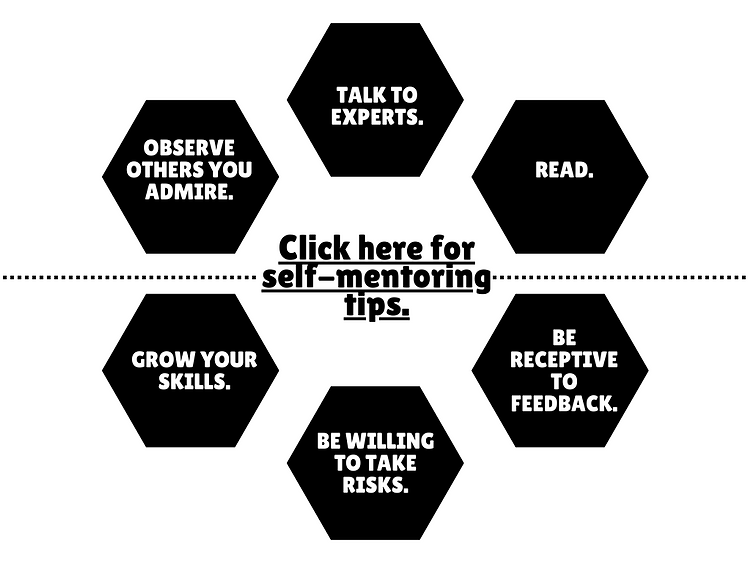
Now that you have read about the four steps involved in the self-mentoring process, you can begin to consider the strategies you want to use to help you reach your goal(s). Self-mentoring is focused on self-directed learning. Once you have a clear picture of who and where you are (1.self-awareness), you can begin the process of implementing a plan based on what you wish to change and collect data (2.self-development). You will analyze your data and feedback (3.self-reflection), and evaluate your progress (4.self-monitoring). Dr. Paula Jorde Bloom (2007) stated, “self-mentoring means cultivating your own professional growth through reflection, networking, and seeking out appropriate resources” (p. 56). A few self-mentoring strategies that you may wish to consider are listed below.

.png)
(Carr, 2012, p. 48)
Time to reflect!

Now that you have read through the list of self-mentoring strategies, consider which strategies may work for you and record your reflections using your notetaking sheet.